
Online shoppers expect quick answers, helpful product information, and a smooth buying experience. When they cannot find the information they need, they may leave a website and look elsewhere. For ecommerce businesses, even small delays in customer support can mean missed opportunities.
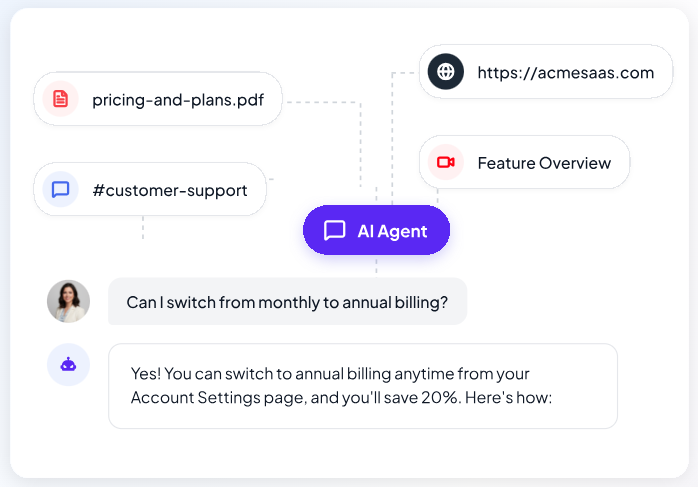
An AI chatbot for ecommerce can help solve this problem by answering common customer questions, guiding shoppers through product choices, sharing store information, and collecting leads. Instead of making visitors search through multiple pages, businesses can give them a convenient way to get assistance through a website chat window.
Whether you run a small online store, manage an established ecommerce brand, or build websites for clients through a digital agency, an AI chatbot can become a useful part of your customer engagement strategy.
In this guide, we’ll explore how ecommerce chatbots work, their benefits, practical use cases, essential features, and how to set one up for your website.
What Is an AI Chatbot for Ecommerce?
An AI chatbot for ecommerce is a conversational tool that helps online shoppers get information and assistance through a website or messaging interface.
Unlike a traditional chatbot that follows a fixed set of predefined rules, an AI-powered chatbot can understand natural-language questions and generate responses using information from its available knowledge sources.
For example, a customer visiting an online clothing store might ask:
- What material is this jacket made from?
- Does this product come in different sizes?
- What is your return policy?
- How long does standard shipping take?
- Which product would be suitable for everyday use?
The chatbot can use relevant website content, product descriptions, FAQs, and business documents to answer these questions.
Depending on the platform and integrations, an ecommerce chatbot may also support lead capture, product guidance, customer service workflows, and connections to other business systems.
The goal is simple: make it easier for customers to find information and make confident shopping decisions.
How Does an Ecommerce AI Chatbot Work?
An ecommerce AI chatbot typically works through a combination of artificial intelligence, natural-language processing, and business knowledge.
Here’s how the process generally works:
1. The business provides information
The chatbot is trained using relevant information such as website pages, product descriptions, FAQs, help-center articles, and store policies.
2. A visitor asks a question
A shopper opens the chat window and enters a question using everyday language.
3. The chatbot interprets the question
The AI identifies what the visitor is asking and looks for relevant information in its available knowledge sources.
4. The chatbot provides an answer
It generates a conversational response based on the information it can access.
5. The conversation continues or moves to human support
The customer can ask follow-up questions. If the request is too complex or requires personal assistance, the conversation can be transferred to a human representative when that functionality is available.
For information such as live inventory, personalized order status, or transaction processing, the chatbot needs the appropriate connected systems and permissions. Training it on general website content alone does not provide access to live store data.
Why Do Ecommerce Businesses Need an AI Chatbot?
An AI chatbot can help businesses improve customer interactions while reducing the amount of repetitive work handled by support teams.
Here are some important benefits.
1. Provide Customer Assistance Around the Clock
Online stores can receive visitors at any time, including evenings, weekends, and holidays. However, human support teams may not be available around the clock.
An AI chatbot can answer common questions even when the support team is offline.
For example, shoppers may want to know about delivery policies, product specifications, payment options, or return conditions before placing an order.
Providing quick access to this information can make the shopping experience more convenient.
2. Help Customers Find the Right Products
Customers sometimes know what they need but aren’t sure which product to choose.
A chatbot can help them narrow down their options by answering questions about product features, specifications, sizes, and intended uses.
For example, a shopper might ask:
“I’m looking for a lightweight backpack for daily office use. What should I consider?”
The chatbot can explain relevant product characteristics and help the shopper explore suitable options based on the product information available to it.
3. Reduce Repetitive Customer Support Questions
Ecommerce support teams often answer the same questions repeatedly.
Common examples include:
- How long does delivery take?
- Can I return a purchased item?
- What payment methods do you accept?
- Where can I find product specifications?
- How do I contact customer support?
An AI chatbot can handle many routine questions using approved business information.
This allows human representatives to spend more time on complex complaints, unusual requests, and situations that require personal attention.
4. Improve Customer Engagement
A website visitor may leave without exploring the products or finding the information they need.
A chatbot gives visitors another way to interact with the business. It can answer questions, explain product details, and guide shoppers toward relevant website content.
A helpful conversation can make visitors feel more confident about exploring a store.
5. Capture More Potential Customers
Not every website visitor is ready to purchase immediately. Some may need additional information or prefer to make a decision later.
A chatbot can offer visitors the opportunity to share their contact information when appropriate. Businesses can then use these details for relevant follow-ups, subject to applicable privacy and consent requirements.
This makes chatbots useful not only for customer support but also for lead generation.
How to Use an AI Chatbot for Lead Generation in Ecommerce
An AI chatbot for lead generation can help ecommerce businesses identify interested visitors and collect useful contact information during website conversations.
Instead of relying only on contact forms, businesses can use conversational interactions to understand what visitors are looking for.
Here are some practical approaches.
Ask Interested Visitors to Share Their Contact Details
A chatbot can invite visitors to provide an email address or phone number when they request additional information, product assistance, or follow-up.
For example:
“Would you like us to send you more information about this product? Share your email address and our team can follow up.”
The request should be relevant to the conversation rather than interrupting visitors unnecessarily.
Offer Useful Resources or Promotions
Businesses can encourage visitors to share their details in exchange for relevant resources or offers.
Examples include:
- Product buying guides
- Size and selection guides
- Product updates
- Promotional information
- Discounts, where available
Make sure visitors understand what they are signing up for.
Identify Customer Interests
Chatbot conversations can reveal what customers are interested in, what products they are researching, and which questions they frequently ask.
When configured appropriately, this information can help businesses categorize leads and plan more relevant follow-ups.
Connect Lead Information With Business Tools
Some chatbot platforms support integrations with CRM and automation tools.
These integrations can help businesses organize contact information, manage follow-ups, and coordinate sales activities.
Before choosing a platform, check which integrations are available and whether they support your existing workflow.
8 Practical Use Cases of AI Chatbots in Ecommerce
An ecommerce chatbot can support customers at several stages of the shopping journey.
1. Answer Product Questions
Customers often need more information before choosing a product.
A chatbot can answer questions about:
- Product specifications
- Materials and ingredients
- Available sizes and colors, when documented
- Product features
- Usage instructions
- Care and maintenance
Accurate product information helps shoppers understand what they are considering.
2. Guide Product Selection
A chatbot can ask customers what they need and help them explore relevant product information.
For example, an electronics store chatbot could explain the differences between two headphones based on their documented features, such as battery life, connectivity, and design.
This can make product research easier for customers.
3. Explain Shipping Policies
Shipping questions are common in online shopping.
A chatbot can explain delivery methods, estimated shipping windows, shipping charges, and geographic restrictions based on the store’s published policies.
Personalized delivery updates require access to an appropriate order or logistics system.
4. Explain Returns and Refund Policies
Customers often want to understand return conditions before purchasing.
A chatbot can answer questions about return windows, eligibility, refund procedures, and other published policies.
It should clearly distinguish between explaining a policy and actually initiating or approving a refund.
5. Answer Frequently Asked Questions
A chatbot can provide quick answers to common questions about:
- Payment methods
- Account registration
- Store policies
- Discounts and promotions
- Customer support availability
- Product information
This can reduce the effort customers spend searching through help pages.
6. Support Customers After a Purchase
Customer assistance does not end when an order is placed.
Shoppers may need information about product usage, care instructions, delivery procedures, or return conditions.
A chatbot can answer general post-purchase questions. For personalized order tracking or account-specific information, the business needs a suitable integration.
7. Support International Customers
Businesses selling to customers in multiple countries may receive questions in different languages.
A multilingual chatbot can help make product and support information more accessible to international visitors.
Check whether the chatbot supports the languages your customers actually use and whether its responses are sufficiently accurate for your business.
8. Transfer Complex Conversations to Human Support
Not every customer request should be handled automatically.
Complaints, unusual refund requests, payment disputes, and sensitive situations may require human attention.
A chatbot with human handoff functionality can help transfer these conversations to a support representative. Preserving conversation history can also reduce the need for customers to repeat themselves.
How to Train an AI Chatbot for Your Ecommerce Website
The quality of a chatbot’s responses depends heavily on the information it can access.
If its knowledge sources are incomplete, outdated, or unclear, it may provide incomplete answers. Businesses should therefore prepare their content before deploying a chatbot.
Step 1: Add Your Website Content
Start with the most useful pages on your website.
These may include:
- Homepage
- Product category pages
- Product detail pages
- Frequently asked questions
- Contact information
- Help-center articles
Focus on content that answers real customer questions.
Step 2: Upload Product Information and Documents
Add relevant product descriptions, specifications, manuals, and guides.
For example, an online furniture store might provide information about product dimensions, materials, assembly instructions, and care recommendations.
The more organized and accurate the information is, the easier it is for the chatbot to provide useful answers.
Step 3: Include Store Policies
Add clear information about shipping, returns, refunds, payment methods, warranties, and other relevant policies.
This helps the chatbot respond consistently to common customer questions.
Step 4: Test With Real Customer Questions
Before making the chatbot available to visitors, test it with questions your customers are likely to ask.
For example:
- What are the dimensions of this product?
- How do I return an item?
- What payment methods are accepted?
- Is this product suitable for outdoor use?
Check whether the answers are accurate, clear, and based on available information.
Step 5: Review and Update Its Knowledge
Products, prices, policies, and business processes can change.
Review the chatbot’s knowledge sources regularly and update them when information changes. If your platform supports automatic content synchronization, understand how frequently it refreshes information and which sources it covers.
Essential Features to Look for in an AI Chatbot for Ecommerce
Not all chatbot platforms offer the same capabilities. Before selecting one, consider the features that align with your business goals.
| Feature | Why it matters |
|---|---|
| AI-powered responses | Helps understand natural-language questions. |
| Website and document training | Allows the chatbot to answer using business information. |
| Product information support | Helps customers understand product features and specifications. |
| No-code setup | Makes deployment easier for businesses without technical teams. |
| Customization | Helps match the chatbot to your brand identity. |
| Lead capture | Collects visitor contact details when appropriate. |
| Human handoff | Allows support teams to handle complex conversations. |
| Analytics | Helps identify common questions and knowledge gaps. |
| Multilingual support | Helps serve customers in different languages. |
| Integrations | Connects the chatbot with relevant business systems. |
If your business needs live inventory updates, personalized order tracking, or automated transactions, verify that the platform supports the necessary integrations before making a decision.
How to Choose the Right Ecommerce Chatbot for Your Business
The best chatbot depends on your business size, customer needs, technical requirements, and budget.
Here are some factors to consider.
For Small and Medium-Sized Businesses
Small and medium-sized businesses may benefit from a chatbot that offers:
- Simple setup
- No-code configuration
- Website and document training
- Automated FAQ responses
- Lead capture
- Affordable and predictable pricing
The goal is to improve customer assistance without creating unnecessary operational complexity.
For Digital Agencies
Digital agencies often manage websites and digital experiences for multiple clients.
They should consider chatbot platforms that provide:
- Flexible customization
- Straightforward website deployment
- Reusable setup processes
- Client-friendly management
- Analytics and reporting
- Integration options
A repeatable chatbot implementation process can make it easier to deliver customer engagement solutions across different client projects.
For SaaS Businesses
SaaS companies can use AI chatbots to answer questions about product features, onboarding, documentation, subscriptions, and technical support.
An AI chatbot for SaaS may be trained on help articles, product documentation, and knowledge bases to help users find answers without navigating multiple support pages.
Although SaaS and ecommerce businesses have different customer journeys, both can benefit from accurate knowledge sources, conversational support, and appropriate human escalation.
Check Pricing and Scalability
Compare pricing models, usage limits, available features, integration costs, and support options.
A platform that works for a small store should also be able to meet your requirements as customer conversations grow.
Can AI Chatbots Work Across Different Industries?
Yes. AI chatbot technology can support different industries, although the information, workflows, and compliance requirements vary.
For example:
- Ecommerce: Product questions, shopping assistance, shipping policies, and lead capture.
- SaaS: Product documentation, onboarding, feature questions, and technical support.
- Healthcare: General patient information, appointment-related assistance, and navigation to appropriate services.
An AI chatbot for healthcare needs particular care around privacy, sensitive information, and clinical accuracy. It should not replace qualified medical professionals or provide unsupported diagnoses.
For any industry, businesses should select a chatbot based on its ability to handle the specific information and workflows their customers need.
How AI-Chatbot.ai Can Help Ecommerce Businesses
AI-Chatbot.ai helps businesses create AI chatbots that can be trained using website content, documents, and other knowledge sources.
For ecommerce businesses, this can provide a conversational way for visitors to ask questions and find information without searching through multiple website pages.
Here are some relevant capabilities to explore:
Train Your Chatbot on Business Information
Use relevant website content, documents, and knowledge sources to help the chatbot answer customer questions.
Learn more about AI chatbot training.
Customize the Chatbot for Your Brand
Adjust its appearance and messaging to create a more consistent website experience.
Explore chatbot customization.
Capture Leads From Website Visitors
Collect contact information from interested visitors and create opportunities for follow-up.
Discover automated lead capture.
Manage Customer Conversations
A shared inbox can help teams review conversations and take over when human assistance is needed.
Learn how to manage customer conversations.
Understand Customer Questions With Analytics
Conversation analytics can help businesses identify common questions, understand knowledge gaps, and improve chatbot responses.
Explore chatbot analytics.
To see how these capabilities can support an online store, visit the AI chatbot for ecommerce solution.
Frequently Asked Questions
What Is the Best AI Chatbot for Ecommerce?
The best option depends on your business goals, budget, integrations, and customer support requirements. Look for a platform that supports accurate knowledge training, easy setup, customization, lead capture, analytics, and human handoff.
Can an AI Chatbot Increase Ecommerce Sales?
An AI chatbot can support sales by helping shoppers find products, answering questions, and reducing uncertainty during purchase decisions. Lead capture can also create opportunities for follow-up. Actual results depend on the website, products, traffic, chatbot quality, and customer experience.
Can an Ecommerce Chatbot Recommend Products?
Yes, a chatbot can guide customers toward relevant products using available product information. More advanced recommendations may require a connected product catalog, customer preferences, or other data integrations.
Can I Add an AI Chatbot to My Ecommerce Website Without Coding?
Yes. Some AI chatbot platforms provide no-code setup options. Businesses can add website content, configure the chatbot, customize its appearance, and install it using the platform’s supported deployment method.
How Do I Train an Ecommerce AI Chatbot?
You can train an ecommerce chatbot using website pages, product descriptions, FAQs, shipping policies, return information, manuals, and other business documents. Test its responses and update the knowledge sources regularly.
Can an Ecommerce Chatbot Track Orders?
A chatbot can explain general order and delivery policies using its available knowledge. To retrieve an individual customer’s live order status, it needs an appropriate integration with the store’s order management or ecommerce system.
How Much Does an Ecommerce AI Chatbot Cost?
Pricing varies by provider and may depend on usage, features, number of chatbots, integrations, or subscription level. Compare the total cost with the functionality your business actually needs.
An AI chatbot for ecommerce can help online businesses make shopping more convenient by answering product questions, explaining store policies, supporting customer service, and capturing potential leads.
For small and medium-sized businesses, it can provide an accessible way to improve customer engagement. Digital agencies can use chatbot platforms to create additional services for clients, while growing ecommerce brands can explore integrations and workflows that support more advanced customer interactions.
The key is to choose a chatbot that fits your business requirements, train it with accurate information, and continue improving it based on real customer conversations.
Ready to make your ecommerce website more helpful for visitors? Explore AI-Chatbot.ai’s ecommerce chatbot solution and discover how an AI-powered assistant can support your customer engagement strategy.